



































“`html
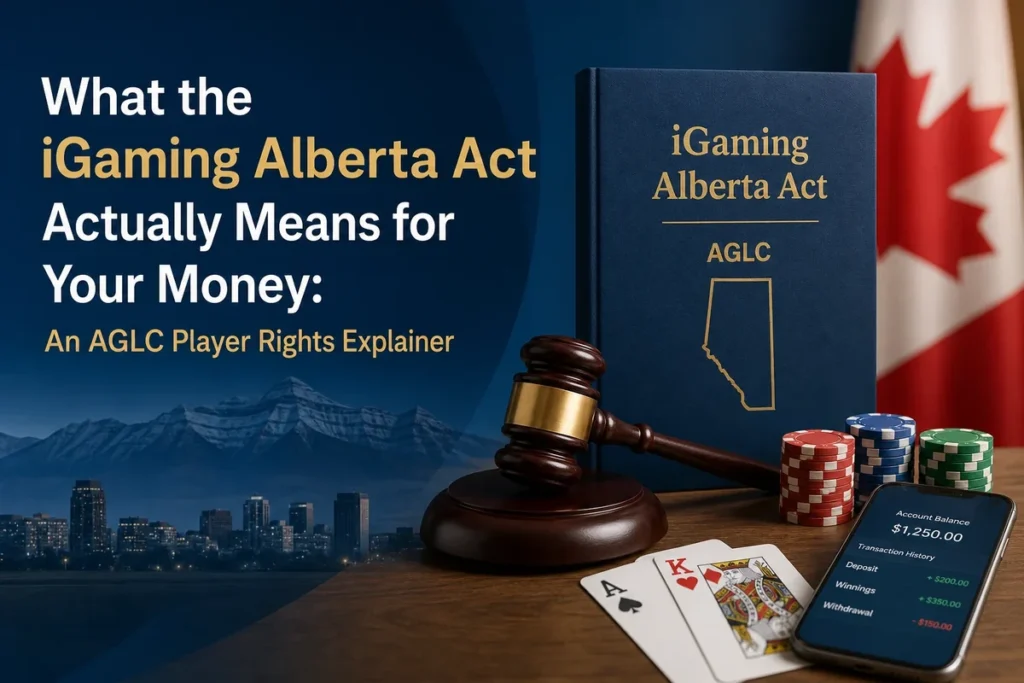
Canada now has two regulated private online casino markets. Ontario has been running under its AGCO and iGaming Ontario framework since April 2022. Alberta joined on July 13, 2026, with AGLC and the newly formed Alberta iGaming Corporation (AiGC) overseeing a market that opened with more than 30 registered operators. The blueprints look similar, Alberta’s AiGC CEO said publicly that Ontario set the template. But the details matter, and if you play in one province or split time between both, the differences affect you in practical ways.
The Regulators: Similar Structure, Different Institutions
Both provinces use a dual-body model. In Ontario, the Alcohol and Gaming Commission of Ontario (AGCO) sets the rules, it registers operators, enforces compliance standards, and requires adherence to its Standards for Internet Gaming. iGaming Ontario (iGO) handles the commercial side: operator agreements, financial reporting, and the public registry at igamingontario.ca.
Alberta mirrors this almost exactly. AGLC handles regulatory oversight, operator registration, and the centralized Self-Exclusion Program. AiGC manages commercial contracts, anti-money laundering requirements, and player complaint handling. Before any operator can take a single Alberta deposit, it must clear both gates, AGLC registration and an AiGC commercial agreement. The same two-step logic applies in Ontario.
The practical difference is maturity. Ontario’s framework has four years of enforcement history behind it. AGCO has issued suspensions and compliance orders, most notably a proposed five-day suspension against PointsBet, and the market has grown through those growing pains. Alberta is starting fresh. AiGC is a newer institution, and its complaint resolution track record will only be established as the market matures. That’s not a reason to avoid Alberta-licensed operators. It’s context worth keeping as the province finds its feet.
Age Limit: The One-Year Gap That Actually Matters
Ontario’s minimum gambling age is 19. Alberta’s is 18. That’s the single most concrete rule difference between the two provinces, and it has real consequences for anyone near that threshold.
Every AGLC-registered operator must verify age through full KYC documentation before a player can deposit or play. There’s no shortcut. But a legal adult in Alberta who turns 18 can open an account at any registered platform the same day, something that wouldn’t be possible across the border in Ontario. The age difference reflects Alberta’s broader policy alignment with other gaming categories, the province sets 18 as the minimum for lottery products and bingo as well.
Who’s Licensed in Each Province
Ontario’s regulated market has grown to 44 licensed operators running 77 gaming websites as of May 2026, according to iGaming Ontario’s monthly reporting. That number has fluctuated, a handful of operators have exited the province, including Casumo in April 2026, but the active operator count remains the largest of any Canadian province. If you want breadth of choice in a regulated market, Ontario currently wins on that metric.
Alberta launched with 30-plus registered operators, per AGLC’s registrant list as of May 1, 2026. What’s striking about Alberta’s list is how familiar the names are. BetMGM, bet365, FanDuel, DraftKings, BetRivers, and theScore Casino are all Ontario-licensed operators that registered for Alberta. These companies aren’t building compliance infrastructure from scratch, they’ve already done it for Ontario and are adapting it westward. According to industry reports, DraftKings was among the first to publicly confirm Alberta plans, with theScore Casino receiving one of the earliest official AGLC green lights, confirmed April 23, 2026.
The operator overlap cuts both ways. If you’ve played at one of these platforms in Ontario, you already know what their product looks like. Game libraries, INTERAC payment infrastructure, and responsible gambling toolsets are largely the same. What you won’t get is any carryover of account history, you’ll create a new account under Alberta’s KYC process regardless of your Ontario history. Our full rundown of best online casinos in Alberta ranks the confirmed registrants. For Ontario, the complete list of AGCO-licensed operators covers every active site in the province.
Self-Exclusion: Where Alberta Has Gone Further
This is the area where Alberta’s framework, despite being newer, has arguably done more than Ontario’s from day one.
Ontario launched BetGuard on May 14, 2026, a centralized self-exclusion portal at betguard.ca that lets any Ontario resident (19+) opt out of the entire regulated online market through a single registration. Before BetGuard, a player who wanted to self-exclude had to contact every licensed operator individually. With 77 active gaming websites, that was not a realistic ask for anyone in crisis. BetGuard fixed a genuine gap. Within two weeks of launch it had logged more than 500 registrations, according to Canadian Gaming Business. Exclusion periods run from six months up to five years, or a custom term.
The caveat is scope. BetGuard covers Ontario’s online regulated market only. It does not extend to land-based casinos or physical gaming venues. Excluding from both online and in-person gambling in Ontario requires separate processes through BetGuard and OLG’s PlaySmart program.
Alberta’s centralized Self-Exclusion Program, built into the AGLC registration framework, covers both online and land-based venues simultaneously from opening day. A single registration excludes a player from every legal online casino in the province and from land-based casinos and racing entertainment centres. According to AGLC’s iGaming portal, players have three distinct options: exclude from all registered iGaming platforms, from all land-based venues, or from both at once. That cross-venue scope is more comprehensive than what Ontario offered at its own 2022 launch, and more comprehensive than BetGuard is today.
If you need support with gambling in either province, our guide to responsible gambling tools across Canada covers what’s available province by province. Ontario players can reach ConnexOntario at 1-866-531-2600. Alberta’s gambling helpline operates at 1-866-332-2322.
Market Size and Revenue: Ontario Is in a Different League
Ontario’s market generated $9.59 billion in total cash wagers in March 2026 alone, an all-time monthly record, according to iGaming Ontario’s public reporting. Cumulative handle for the first quarter of 2026 hit $27.8 billion, with operators earning $1.13 billion in non-adjusted gross gaming revenue. There are 1.235 million active player accounts in the province. By almost any measure, Ontario is the largest regulated online casino market in Canada and one of the largest in North America.
Alberta enters the market with more operators at launch than Ontario had in 2022, and with a framework explicitly designed to learn from four years of Ontario experience. The AiGC CEO put it plainly, as reported by Gaming News Canada: “Ontario set the template. It’s about using information that’s been successful. We would not be hitting that July 13 date without the information that has been shared with Ontario.” Alberta is, in effect, getting a running start. Volume will be smaller, but the foundational protections are comparable from day one.
The Tax Question
Canadian players in Ontario and Alberta frequently ask whether casino winnings are taxable. The answer is the same in both provinces. The Canada Revenue Agency treats gambling winnings as non-taxable income for recreational players, this applies whether you’re playing at an AGCO-licensed Ontario casino or an AGLC-registered Alberta platform. The CRA’s position is that casual gambling is not a business activity, and winnings are therefore not income for tax purposes.
The exception is narrow but real. If gambling is conducted in a business-like manner, systematic strategies, professional volume, primary income source, the CRA may treat it differently. For the overwhelming majority of recreational players, what you win at a regulated casino in either province stays yours. Any genuinely large win is worth a conversation with an accountant. For a broader view of how Canadian provincial markets stack up, our overview of licensed online casinos across Canada covers what players can access province by province.
Bottom Line
Ontario and Alberta use nearly identical regulatory blueprints, dual-body oversight, segregated player funds, mandatory RNG certification, and centralized self-exclusion, with the same major operators running in both markets. The meaningful differences are the age threshold (18 in Alberta versus 19 in Ontario), Alberta’s broader self-exclusion program that covers land-based venues from launch, and the fact that Ontario’s market is four years more mature with a longer enforcement track record. Pick the province you’re in, verify the operator is registered with the relevant regulator before you deposit, and the structural protections are real in both.
Sources
- AGLC iGaming Portal, aglc.ca/igaming
- iGaming Ontario Operator Registry, igamingontario.ca/en/operator
- Canadian Gaming Business: “Alberta iGaming July 13 Launch,” March 31, 2026, canadiangamingbusiness.com
- iGaming Ontario BetGuard launch announcement, May 14, 2026, Newswire.ca
- Casino.org: “28 Operators Line Up for Alberta’s New iGaming Market”, casino.org
- iGaming Ontario Monthly Performance Report, March 2026, igamingontario.ca
- Gaming News Canada: “11 Things We Learned About Alberta’s Incoming Market from Dale Nally,” May 27, 2026, gamingnewscanada.ca
“`